
India's appetite for imported crude oil may wane in fiscal year (FY) 2023 from record levels in pre-pandemic 2019-20 fiscal as higher oil prices, a spillover from the conflict in Ukraine, and increasing use of biofuels affect domestic demand for petroleum products. Brent crude surged to a nine-year high, shy of a July 2008 record $147.50 a barrel, before declining to around $100 a barrel - but the volatility in commodity rates will slow global economic growth and use of fuels. Demand for all oil products may grow at only 2-3 per cent in FY23, slower than the current fiscal and nearly half the 5.5 per cent growth estimated by the petroleum ministry, according to industry officials.

The opposition party vowed to hit the streets against the "Modi-made inflation" and run a people's movement over price rise.

Mudasir Ahmed, a businessman from Kashmir, tells Rediff.com's A Ganesh Nadar what he would like to see in Finance Minister Nirmala Sitharaman's Budget.

Officials from State-run refiners contend that savings from purchase of Russian oil are used to offset a part of the losses in revenues from selling transport fuels and LPG at State-set rates.

Ahead of a meeting of oil producers' cartel OPEC, India on Tuesday said the current oil prices are "very challenging" and rates need to be a "little bit sober" lest they impact a consumption-led recovery of the global economy. Oil Minister Dharmendra Pradhan, who last week again urged OPEC to phase out its production cuts, said India is a price-sensitive market and it will buy oil wherever it gets competitive rates. The rebound in international oil prices from lows hit last month on the back of demand recovery has led to a spike in petrol and diesel retail prices in India.

Tata Motors has hiked the price of its premium small car 'Indica' by an average of 1.9 per cent with immediate effect.

Ever wondered why the difference between a Santro Xing GL and a Santro Xing GLS was over Rs 30,000 although both looked the same? This article will try to give you a breeze through into what adds cost to a car.

Amid a shift in mobility trends and people increasingly opting for less polluting energy sources, sales of compressed natural gas (CNG) vehicles increased more than 82 per cent in the past five years. A total of 729,902 CNG vehicles were sold in 2022-23 against 400,825 in 2017-18, according to VAHAN Dashboard. Though the increase in sales of CNG-powered vehicles has been significant, their share in overall vehicle sales remains minuscule as is the case with EVs.

Key infrastructure sectors -- from railways to power, and from coal to petroleum -- will not only be part of the achievements but promises too, as the BJP fights to get a third term at the Centre.
Reeling under increasing input costs, especially steel, country's biggest car maker Maruti Suzuki India has hiked prices of its products across various models between Rs 1,000 and Rs 18,000. The company has hiked the price of its latest model Swift Dzire by Rs 18,000. It had launched the sedan with an introductory price ranging Rs 4.49 lakh and Rs 6 lakh across different variants.

Indian imports of Russian crude oil may stabilise or even decline in 2024 from record 2023 levels amid shrinking discounts, lower output, and a rebound in West Asian supplies, according to the ship-tracking data and industry executives. This may impact the billions of dollars in annual savings that India made last year. Imports of Russian oil jumped by a record 140 per cent in calendar 2023 to 1.79 million barrels a day (b/d) from 740,400 b/d in 2022, when Russia marched into Ukraine in February, and from just 102,000 b/d in 2021, according to the data from Paris-based market intelligence agency Kpler.
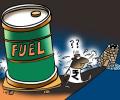
The windfall tax on oil produced within India and fuel exported overseas will make up for more than three-fourths of the revenue that the government lost when it cut excise duty on petrol and diesel to cool soaring inflation, industry sources said. India on July 1 joined a select league of nations globally that have taxed windfall gains accruing to oil companies from soaring energy prices. The government slapped a Rs 6 per litre tax on the export of petrol and jet fuel (ATF) and Rs 13 a litre on the export of diesel effective July 1. Additionally, a Rs 23,250 per tonne tax was levied on crude oil produced domestically.

With the rupee continuing to remain weak against the US dollar, losses on diesel have climbed to Rs 9.45 per litre, upsetting the government's subsidy maths.
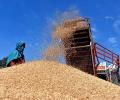
The uptick in prices ranging from steel to wheat could benefit lots of commodity-based companies -- from State-owned SAIL to the agro exporters.

Congress took a swipe at Prime Minister Narendra Modi saying he has turned "unlucky" as the economy and exports were down and prices soaring.

Millions of people in Pakistan were left without electricity when a major power outage occured on January 23.
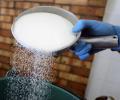
The last few years have been uncharacteristically good for the Indian sugar sector for a variety of reasons. While on the one hand, the weather supported good crop production; on the other hand, the programme to blend ethanol with petrol took off in a big way. The long-pending problem of burgeoning sugarcane arrears almost came down to nil and exports boomed to record highs.

The Congress on Monday stepped up its attack on the BJP-led Centre over the issue of price rise with Rahul Gandhi saying the biggest problems facing the country were unemployment, inflation and growing hatred.

Oil price have started rising as President Barack Obama's efforts to win backing for a military strike against Syria cleared its first hurdle.

Billionaire Mukesh Ambani's Reliance Industries Ltd on Friday reported a 46 per cent jump in net profit for the three months ended June on the back of bumper earnings from oil and telecom businesses. The oil-to-retail-to-telecom conglomerate's consolidated net profit rose to Rs 17,955 crore during April-June period -- the first quarter of 2022-23 fiscal year -- from Rs 12,273 crore in the year-ago period, it said a stock exchange filing.

This could be the reason why Prime Minister Narendra Modi mentioned tomato, onion, and potato as his government's 'TOP' priority, in an election rally on February 5 in poll-bound Karnataka.

India's import of cheap Russian oil scaled another record in May and is now more than the combined oil bought from Saudi Arabia, Iraq, UAE and the US, industry data showed. India took 1.96 million barrels a day from Russia in May, 15 per cent more than the previous high in April, according to data from energy cargo tracker Vortexa. Russia now makes up for nearly 42 per cent of all crude oil India imported in May.

India's imports of crude oil from Russia touched a new high of 1.64 million barrels per day in March and is now double of the purchases from Iraq - the nation's traditional top oil supplier. But the purchases appear to have plateaued as growth has slowed. Russia continued to be the single largest supplier of crude oil, which is converted into petrol and diesel at refineries, for a sixth straight month by supplying more than one-third of all oil India imported, according to energy cargo tracker Vortexa.

'Will Imran compromise with the army? We are all human beings. We all compromise.'

Why does the world's fastest-growing major consumer of energy fail to attract investments in oil and gas? This is a question worth pondering after private sector conglomerate Reliance Industries Ltd (RIL) failed to close a $15-billion downstream asset deal with Saudi Arabia's national oil company, Aramco. It's understandable if multi-billion dollar investments in oil and gas projects or deals involving state companies that need to traverse a complex bureaucracy at state and federal levels and the corridors of ministries unravel. However, Mukesh Ambani-run RIL, India's most successful energy company, is not typically known to fumble on closing deals (Ambani closed deals worth around Rs 2 trillion early last year in telecom and retail with blue chip investors).

What is more surprising is that a surge in Russian oil supplies has come after the G7 imposed stringent sanctions on Moscow.

International oil prices retreated from an over seven-year high but was still above $100 a barrel and continue to pose threat to India's inflation rate and current account deficit. While there are no supply concerns as the oil route remained open, consumers will feel the pinch when PSU oil firms start passing on the increase in international rates through a revision in petrol and diesel prices, which have been on a pause for over three-and-a-half-months in view of elections in Uttar Pradesh and four other states. The government is "closely monitoring the situation" and will "take appropriate steps as and when required", a top official said. Brent crude oil surged past $105 per barrel on Thursday for the first time since August 2014, following Russia's invasion of Ukraine.

Indian Oil Corporation (IOC), the nation's biggest oil firm, on Tuesday reported a 31.4 per cent drop in the fourth quarter net profit as record refining margins were wiped away by a margin squeeze in petrochemicals and losses on auto fuel sales. Standalone net profit of Rs 6,021.88 crore, or Rs 6.56 a share, in January-March, compared with Rs 8,781.30 crore, or Rs 9.56 per share, in the same period a year back, the company said in a stock exchange filing. Sequentially, the profit was higher than Rs 5,860.80 crore in the previous quarter.

Every 10 per cent rise in crude oil price will shave off around 0.2 percentage point (pp) from India's GDP growth and widen the current account by 0.3 per cent, says Nomura.

Can Bhavish Aggarwal upend the electric two-wheeler market, which is now overwhelmingly in favour of scooters?

Oil producers cartel OPEC's share in India's oil imports fell to an all-time low of 46 per cent in April as purchases of cheaper Russian oil peaked, industry data showed. Organization of the Petroleum Exporting Countries (OPEC) nations, mainly in the Middle East and Africa, had a 72 per cent share of all crude oil India imported in April 2022. This share slid to 46 per cent in April 2023, according to energy cargo tracker Vortexa.
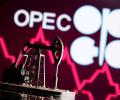
Changes in global oil and gas rates matter more to India's economy than other major economies because the country imports around 87 per cent of its oil, half of its gas in the form of LNG, and over 60 per cent of its LPG.

Sachin Bansal, who had co-founded Flipkart with Binny Bansal in 2007, would exit the company

Modi made a strong case for a partnership between the producers and consumers in the oil market as it exists in other markets.

Global oil majors may be teaming up with investment funds that are already in the race to acquire Bharat Petroleum Corporation Ltd (BPCL), a document detailing steps needed to complete India's biggest privatisation showed. Billionaire Anil Agarwal's Vedanta group as well as two US funds -- Apollo Global and I Squared Capital - had last year submitted initial bids to buyout the government's entire 52.98 per cent stake in India's third-biggest oil refiner and second-largest fuel retailer. Detailing the 'Next Step', the 'Brief Note on BPCL Disinvestment' said Transaction Advisor and Asset Valuer are to submit an inception report, bidders have to complete due diligence of the company and sale purchase agreement has to be finalised.

Taking a swipe at Prime Minister Narendra Modi over his 'Make in India' campaign, Rahul Gandhi on Wednesday said the Rs 10 lakh suit he wore during US President Barack Obama's visit was "Make in UK".
The prices of petrol and diesel have been recently hiked and more can be expected in coming months. A few tips on how to make your litre of petrol go the distance.

German automotive giant Volkswagen (VW) has said it will focus on the premium sedan/sport utility vehicle (SUV) segment and avoid the mass hatchback segment. "Customers don't expect anything less than a premium product from VW. "Customers expect a certain level of quality and driving dynamics. We have to stay true to that DNA. "The day we go mass, customers will reject us," says Ashish Gupta, brand director, VW India.

Prime Minister Narendra Modi on Saturday said the target date for achieving 20 per cent ethanol-blending with petrol has been advanced by five years to 2025 to cut pollution and reduce import dependence.

Currently, Maruti Suzuki has 14 car brands, but it has decided to expand into some new segments.
